
sync
[ PRODUCTIONS ]





LOGOS MATER
The
audiovisual
project
LOGOS
MATER
explores
language
beyond
meaning,
as
sound,
rhythm,
texture and resonance.
Amelie
Duchow
invites
participants
worldwide
to
contribute
recordings
in
their
native
languages,
which
become
the
raw
material
for
an
evolving
sonic
composition.
Through
sound
analysis
and
digital
transformation,
these
contributions
converge
in
a
live
performance
connecting languages, territories and identities.
Rather
than
communicating
through
words,
LOGOS
MATER
constructs
a
global
sonic
language
that
transcends
cultural
and
geographical
boundaries.
LOGOS
MATER
was
developed
in
close
connection
with
its
chromatic
dimension,
bringing
the
sonic
layers
into
dialogue
with
a
language
that
suspends
the
image
to
foreground
light,
evolving
into
a
form
of
visual
phonetics.
artist :
AMELIE DUCHOW
concept and music : AMELIE DUCHOW
concept and video : MARCO MONFARDINI
format : audio/video performance
production : sync / extrasync
website :
Logos Mater
Amelie Duchow
booking :
info@extrasync.net
CALLIGRATON
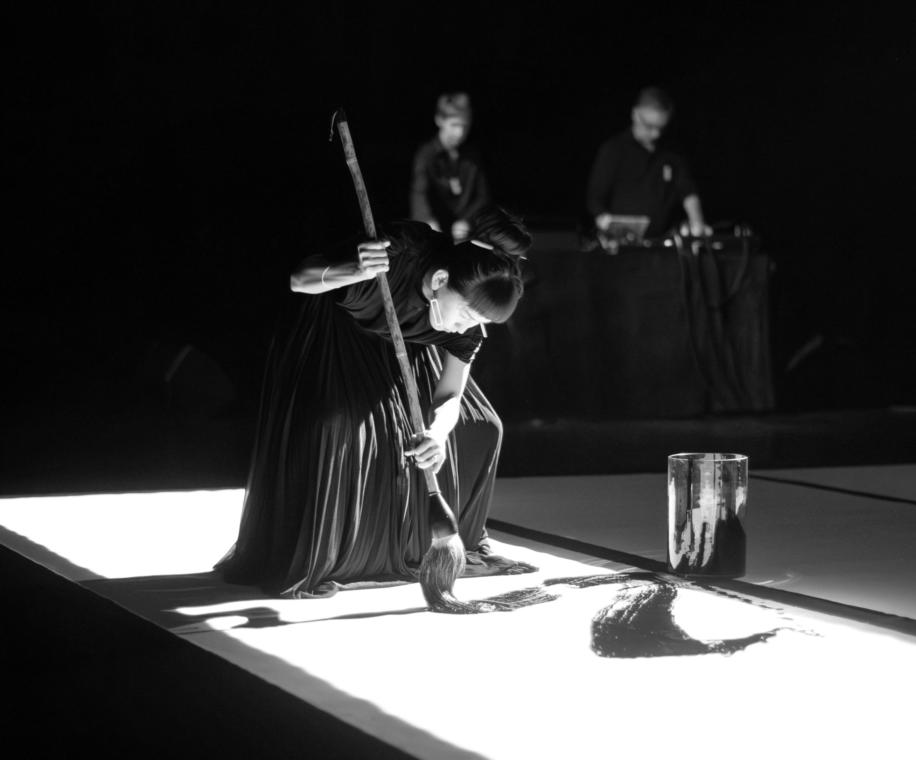
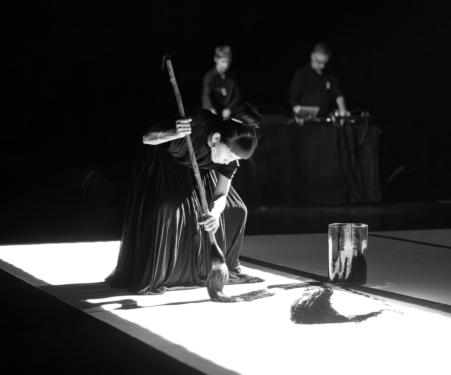
Calligraton is a live performance that emerges from the collaboration of the duo Schnitt and
Japanese calligrapher Aoi Yamaguchi. The project is developed on two apparently distant
forms of expression, experimental sound composition and Japanese calligraphy "shodō".
Schnitt and Aoi Yamaguchi explore in Calligraton the relationship between sound and writing,
rhythms, balances, full and empty spaces, sounds and silences confront each other on stage,
discovering a profound affinity between sound and sign. The electronic/digital compositional
gesture relates to the calligraphic gesture in an intimate conversation that explores the
interconnection between the human gesture and the technological element.
The performance develops in a series of movements, each characterized by calligraphic
writing performed by Aoi Yamaguchi on Japanese gasen paper and a related sound composition
performed live by Schnitt.
artist :
SCHNITT + AOI YAMAGUCHI
concept : SCHNITT + AOI YAMAGUCHI
music and video : SCHNITT
calligraphy : AOI YAMAGUCHI
format : audio/video performance
production : Asia/Europe Cultural Festival (AEC Fest) / sync / extrasync
website :
Calligraton
Schnitt
Aoi Yamaguchi
booking :
info@extrasync.net
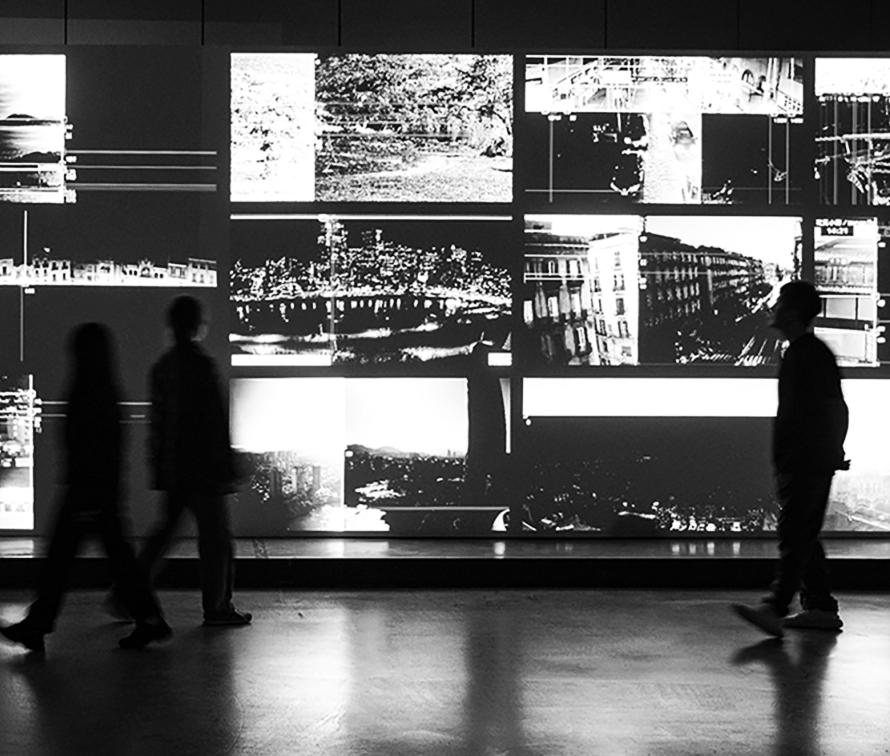
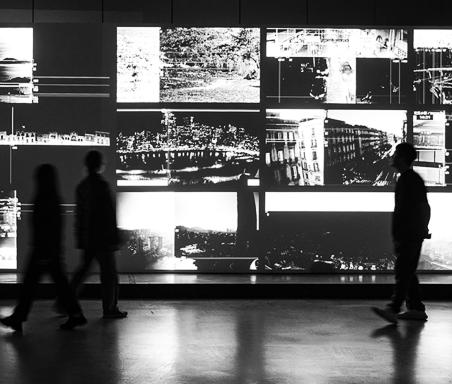
SCANSCAPE
SCANSCAPE
developed
by
the
duo
SCHNITT
(
Marco
Monfardini
and
Amelie
Duchow)
and
the
media
artist
Gianluca
Sibaldi
is
a
site-specific
audio
/video
installation
based
on
an
analysis
of
urban city life.
The
technology
developed
by
the
artists
for
SCANSCAPE
permits
to
access
in
realtime
on
numerous
public
world
webcams
which
undergo
a
continuous
scanning
process
towards
the
device
EXTRAscan,
a
sort
of
scanner
able
to
read
the
characteristics
of
the
scanned
cities
converting
them
in
sound
and
video
images.
An
urban
symphony
and
contemporary
reinterpretation
that
follows
the
city
life,
reflecting
its
characteristics
in
form
of
visual
and
sound
perception.
Since
the
early
90s,
public
webcams
are
present
in
our
urban
city
life,
citizens
coexist
with
this
technological
system
that
renders
their
life,
their
daily gestures, their movements public.
SCANSCAPE
emphasizes
the
relationship
using
technology
as
a
creative
tool
by
designing
a
hypothetical
global
city
where
questions,
doubts
and
fears
about
the
technological
invasion
harmonize
with
the
sharing
of
culture,
traditions
and
attitudes
conveyed
by
technology
itself.
A
global
city
that
submits
its
diversity
to
a
process
of
continuous
analysis
expressing
its
existence
towards
sound
as
a
universal
language.
The
installation
SCANSCAPE
aims
to
confront
ourselves
with
the
life
of
the
present,
offering
a
global
view
that
through
the
analysis
of
different
world
cities
hypothesises
a
conscious
coexistence
between
humanity
and technology.
artist :
SCHNITT + GIANLUCA SIBALDI
website :
SCANSCAPE
concept and music : SCHNITT + GIANLUCA SIBALDI
booking :
info@extrasync.net
format : audio/video lnstallation
production :
ACC Asia Culture Center
/ sync /
extrasync
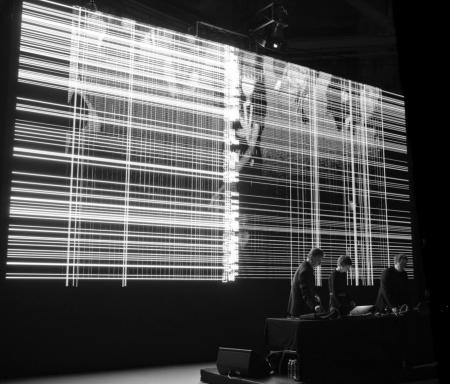
SCANAUDIENCE
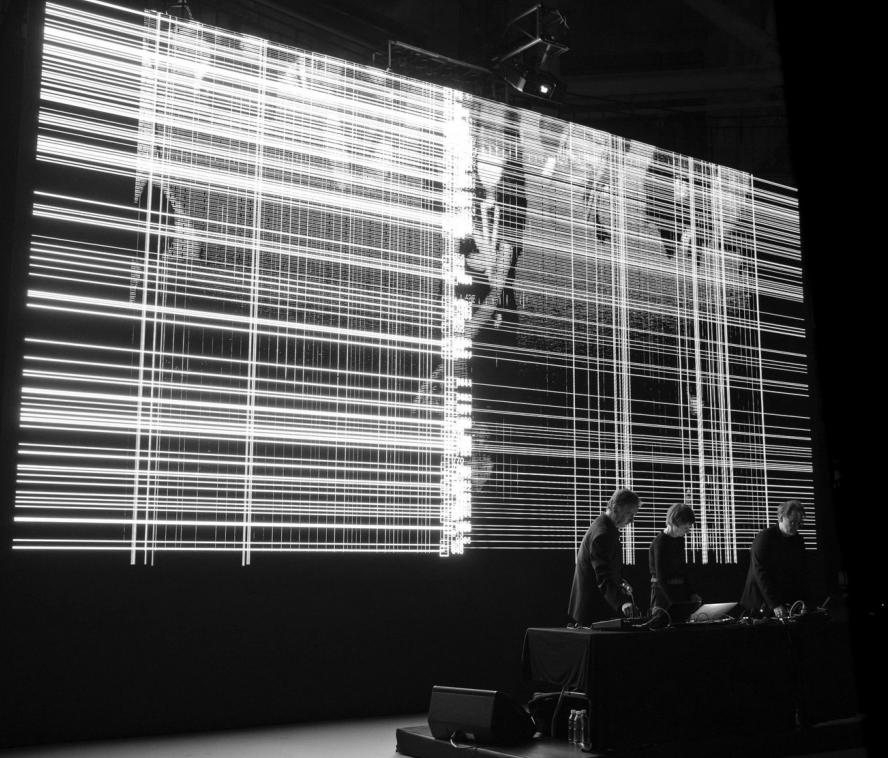
SCANAUDIENCE
is
a
site-specific
live
audio/video
performance
based
on
the
realtime
scanning
of the audience.
The
project
developed
by
Gianluca
Sibaldi
and
the
duo
SCHNITT
(Marco
Monfardini
and
Amelie
Duchow)
uses
a
specially
by
the
artists
developed
electronic
device:
a
scanner
able
to
"read"
any
object,
architecture
or
living
being
in
its
formal
elements,
translating
the
object's outer and inner dimension in sound and video images.
A
bar
of
light
is
the
primary
tool
in
this
operation
of
realtime
scanning,
overpassing
in
several
sequences
the
audience,
analyzing
the
characteristics
related
to
people’s
body
shape,
height,
clothing
color
and
material.
The
software
developed
by
the
artists
is
based
on
computer
vision
algorithms
and
a
special
kind
of
neural
network
to
generate
both
visual
and audible results.
The
scanning
process
develops
with
a
sequence
of
slow
vertical
and
horizontal
scannings,
memorizing
the
basic
data
informations,
continuing
with
detail
and
intense
scanning
sequences,
the
beamed
light
passes
through
the
audience.
Contemporarily
a
network
of
softwares
processes
the
recaptured
light
elaborating
the
scanned
data
in
realtime
generating
a
new
visual
and
audible
restitution.Each
person
processed
by
the
scanner
generates
its
own
individual
sound
and
video
images
accordingly
the
audience
itself
is
becoming
the
protagonist
of
the
show,
determinating
directly
the
audiovisual
output,
experiencing
at
the
same
time
a
new
sonorous
and
visual
dimension
under
the
artists
direction.
The
trio
uses
the
scanner
as
a
tool
for
exploring
and
reading
reality.
It
extracts
features
that
are
usually
undetectable
through
a
cross-contamination
between
visual
elements
that
generate
sound
and
sound elements that have visual correspondences.
artist :
SCHNITT + GIANLUCA SIBALDI
website :
SCANAUDIENCE
concept and music : SCHNITT + GIANLUCA SIBALDI
booking :
info@extrasync.net
format : audio/video performance
production : sync /
extrasync
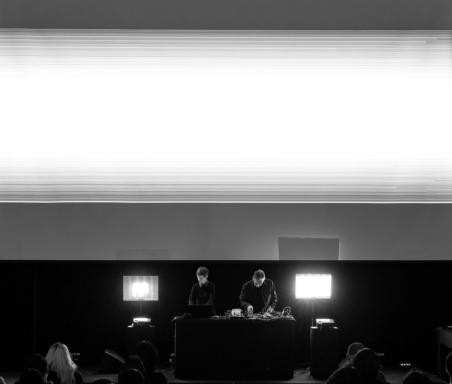
WHITE BALANCE
In
White
Balance,
SCHNITT
explore
white
as
a
perceptual
threshold
between
the
visible
and
the
audible,
presence
and
absence.
Drawing
on
the
photographic
process
of
white
balance,
which
calibrates
colour
temperature
to
render
reality
“correctly”,
the
duo
reinterpret
this
technical procedure as a metaphor for audiovisual translation.
Inspired
by
Robert
Ryman’s
radical
minimalism,
white
is
conceived
not
as
absence,
but
as
potential:
a
field
containing
all
frequencies
of
light
and,
by
extension,
all
sonic
possibilities.
The
performance
reverses
the
conventional
relationship
between
image
and
sound,
allowing
light
to
generate
sound.
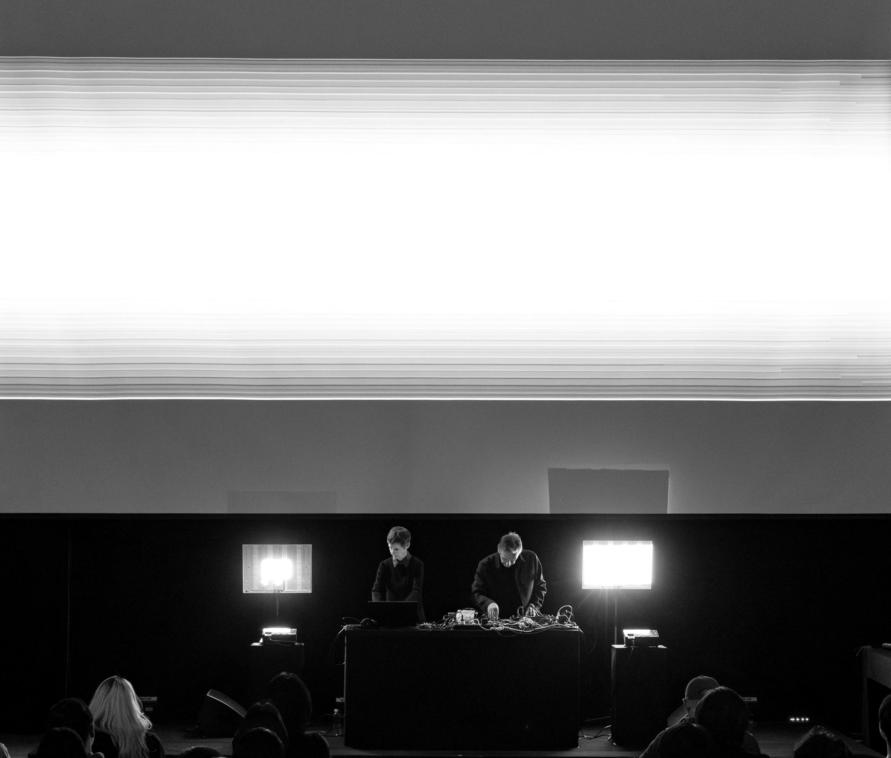
Four
video
projectors
emit
modulated
white
pulses
towards
photosensitive
sensors,
which
convert
variations
in
brightness
into
electronic
signals
processed
in
real
time.
This
system
creates
a
feedback
loop
between
light,
sound,
performers
and devices, continuously reshaping the audiovisual composition.
Through
this
process,
White
Balance
questions
the
notions
of
neutrality
and
perceptual
truth,
revealing
the
hidden
sonic
potential
of
digital
images
and
translating
the
invisible
into
the
audible.
The
performance
unfolds
as
a
continuous
rebalancing
of
perception,
approaching the limits of what can be seen and heard.
artist :
SCHNITT
concept, music and video : MARCO MONFARDINI / AMELIE DUCHOW
format : audio/video performance
production : sync / extrasync
website :
WHITE BALANCE
Schnitt
booking :
info@extrasync.net
DETECT
Detect
is
a
project
that
explores
the
phenomenon
of
inaudible
sound
—
sound
that
exists
beyond
the
threshold
of
human
perception,
generated
by
the
electromagnetic
emissions
of
the
technological
environment
that
surrounds
us.It
focuses
on
the
hidden
acoustic
dimension
of
our
contemporary
landscape:
a
continuous,
imperceptible
flux
of
electromagnetic
energy
produced
by
devices,
networks,
and
communication
systems
—
WiFi,
Bluetooth,
GSM,
data
streams — an invisible soundscape that defines our presence in the digital age.
At
its
core,
Detect
examines
the
transformation
of
perception
in
a
world
saturated
with
immaterial
signals.The
project
investigates
how
technology,
while
expanding
the
spectrum
of
human
communication,
simultaneously
conceals
vast
portions
of
reality
within
inaudible
and
invisible
layers
of
frequency.These
electromagnetic
fields
—
silent
yet
omnipresent
—
are
the
pulse
of
our
digital
existence:
an
abstract
sonorous
network
that
connects
and
controls
us.By
making
these
frequencies
audible,
Detect
exposes
the
hidden
texture
of
the
environment, transforming the invisible into an aesthetic experience.
Monfardini
approaches
these
signals
as
both
archaeological
traces
and
living
organisms
:
evidence
of
a
continuous
human–machine
dialogue,
yet
also
independent
entities
that
vibrate
and
interact
beyond
our
awareness.In
this
sense,
Detect
becomes
not
only
an
act
of
listening,
but
an
act
of
revelation
—
a
decoding
of
the
electromagnetic
unconscious
of
the
contemporary world.
artist :
MARCO MONFARDINI
concept, music and video : MARCO MONFARDINI
format : audio/video performance
production : sync
website :
DETECT
MARCO MONFARDINI
booking :
info@extrasync.net


UN-LOG
The
term
log
file
refers
to
a
file
in
which
every
operation
performed
by
a
system
or
a
user
is sequentially and chronologically recorded.
Each
event,
each
error,
each
movement
leaves
a
trace.The
management
of
logs
allows
us
to
monitor,
analyze,
and
prevent
anomalies
or
threats
—
a
practice
of
surveillance
that,
behind
its apparent technical neutrality, has evolved into a global device of memory.
A
log
file
preserves
the
entire
history
of
actions:
an
invisible
chronicle
that
mirrors
a
controlled
time,
an
automated
memory
that
writes
without
interruption.It
becomes
a
logbook
of
the present
, recording every gesture before we are even aware of it.
In
UN-LOG
(
literally
“to
disconnect”
),
Marco
Monfardini
transforms
the
log
file
into
a
metaphor for our relationship with time and memory.
The
log
becomes
a
living
organism
—
a
visual
and
sonic
archive
in
constant
writing
—
a
digital
memory
that
does
not
forget,
that
overwrites
and
replaces
human
memory.
It
is
an
unconscious
map
of
behavior,
a
code
that
registers
our
passage
within
the
continuous
flow
of
information.To
un-log
means
to
suspend
the
automatic
writing
of
the
digital
self,
to
interrupt
the
continuity
of
recording
in
order
to
recover
a
direct,
sensory,
and
imperfect
perception.
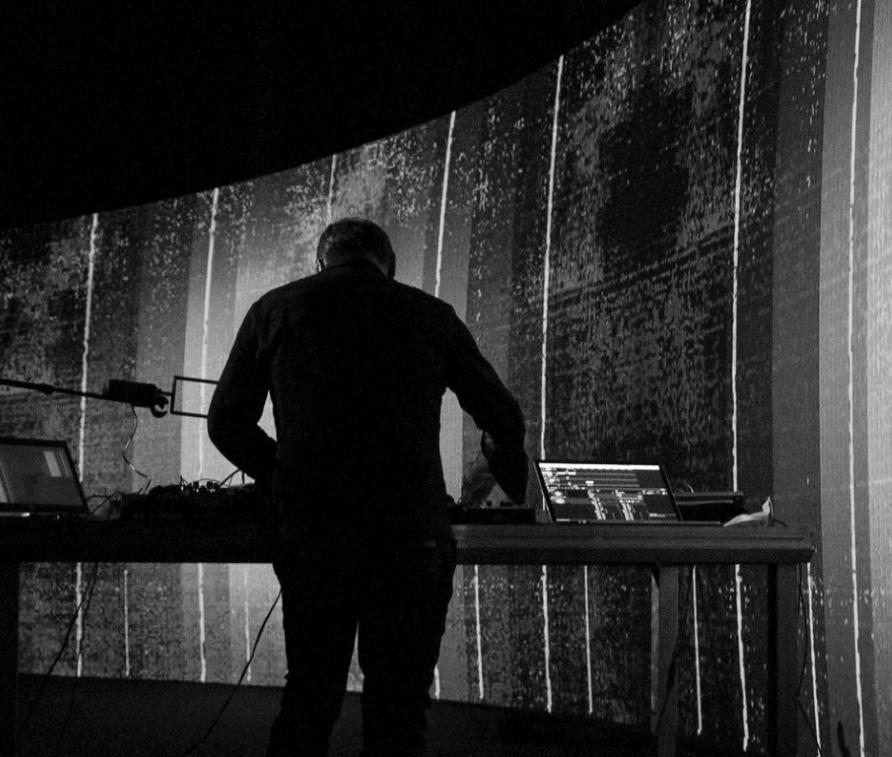
The
visual
structure
of
UN-LOG
unfolds
as
a
stratified
field:
a
flow
of
data
transforming
into
image,
a
dynamic
landscape
where
glitches,
fragments,
and
errors
emerge
as
the
residues
of a corrupted memory.
MEMORY CODE
The
performance
develops
an
audiovisual
system
in
which
sound,
moving
images
and
numerical
computation
interact
to
evoke
the
mechanisms
of
remembering.
Abstract
signals
generated
through
digital
processing
function
as
fragments
of
a
visual
language,
suggesting
images
that
remain unseen yet continue to shape our perception.
Conceived
as
a
kind
of
visual
scanner
of
memory,
MEMORY
CODE
examines
the
unstable
relationship
between
perception,
recollection
and
representation.
Rather
than
reproducing
recognisable
images,
SCHNITT
translates
the
idea
of
visual
memory
into
an
evolving
audiovisual
structure,
where
image
and
sound
become
instruments
for
exploring
what
remains
beyond the visible.
The
project
also
opens
up
the
possibility
of
incorporating
the
individual
visual
memories
of
spectators,
extending
the
performance
into
a
field
of
subjective
associations
and
personal
recollections.
Each
memory
becomes
a
potential
source
of
material,
questioning
how
private
images might be translated into a shared audiovisual experience.
GIMP
GIMP
is
an
electronic
sound
composition
by
Amelie
Duchow,
developed
in
response
to
Gary
Needham’s
essay
“Bringing
out
the
Gimp”,
published
in
Fashion
Theory.
Created
in
collaboration
with
Needham
and
artist
Yvonne
Trew
for
the
Fashion
Continuum
event
at
Nottingham
Contemporary,
UK,
on
22
April
2016,
the
work
explores
the
figure
of
the
gimp
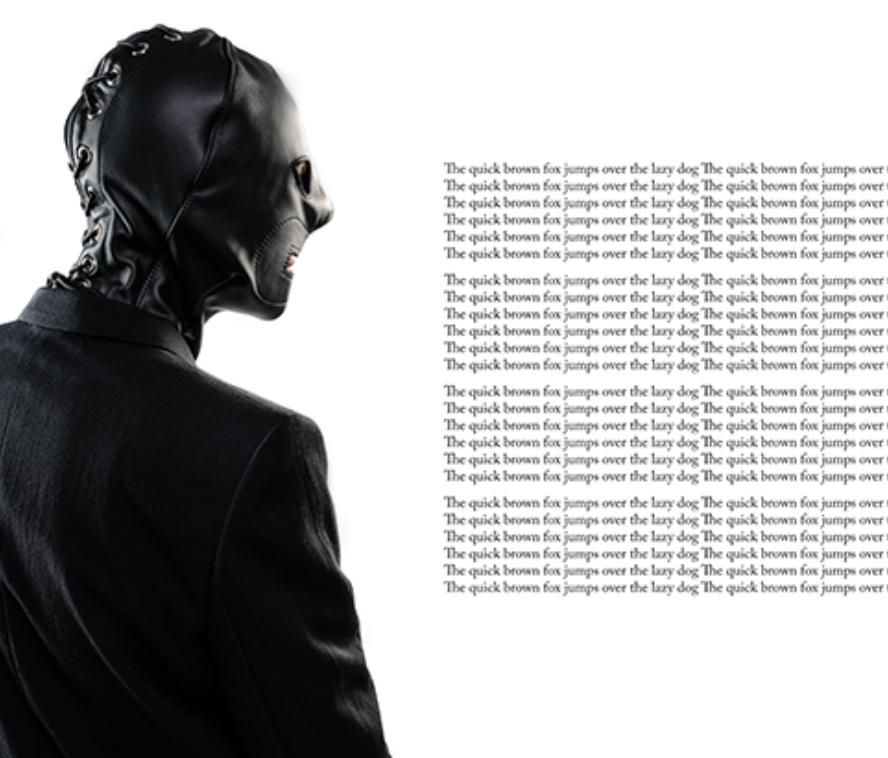
across popular culture, fashion, art and BDSM.
Associated
with
concealment,
masking
and
the
refusal
of
identification,
the
gimp
challenges
conventional
notions
of
identity,
visibility
and
humanity.
Duchow’s
electronic
soundscape
acts
as
a
sonic
counterpoint
to
this
figure,
translating
its
associations
with
risk,
transgression, fear and ambiguity into an abstract auditory experience.
Originally released as a limited edition of 100 CDs, the publication contains a twelve-minute
composition
featuring
the
voice
of
Gary
Needham,
who
performs
spoken
extracts
and
key
words
from
his
essay.
GIMP
explores
how
sound
can
evoke,
transform
and
challenge
an
image
that
remains unseen.
TONSTICH
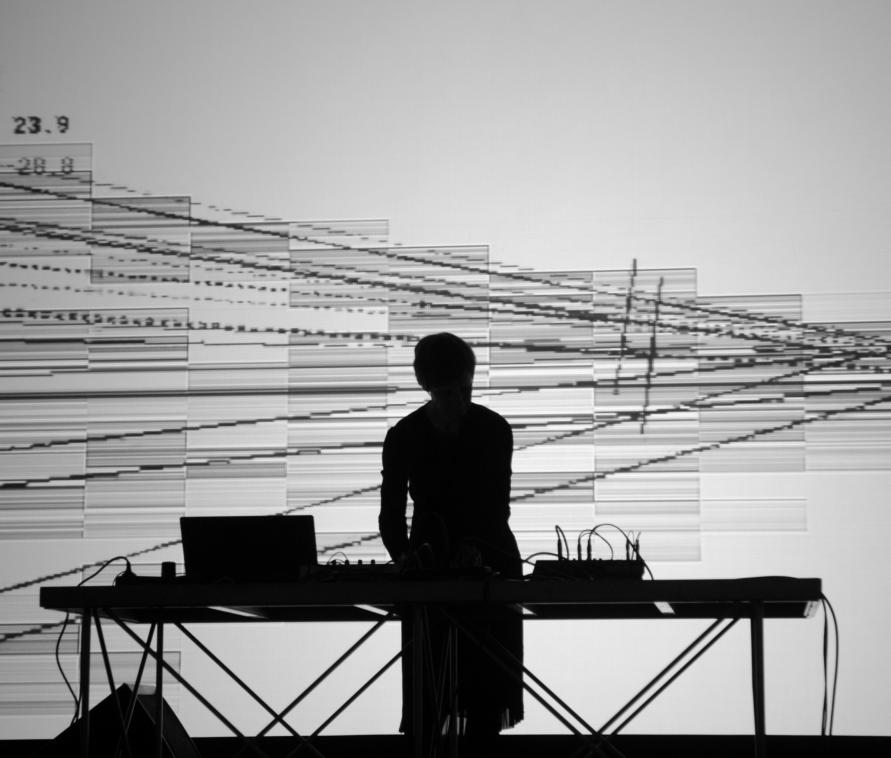
TONSTICH is an audio/video project based on the creation of a sonorous dress.
In
TONSTICH
basic
sound
parameters
-
Attack
Decay
Sustain
Release
are
directly
related
to
the dress construction parameters X and Y (length | width).
The
characteristics
of
the
shape,
fit
and
look
of
this
imaginary
dress
are
determined
by
the
audio
composition,
following
the
strict
manufacturing
schedule
of
each
production
unit,
the
dress
is
initially
modelled
by
the
industrial
production
process
yet
continuously
modified
by the listener’s individual sonorous experience.
The
audio
material
used
for
the
composition
of
TONSTICH
is
the
authentic
sound
recorded
in
industrial manufacturing facilities of garments and textiles.
Single
noise
patterns
from
the
bartack
machine
mixed
with
the
humming
of
the
2
needle
machine weave in combination with electronic structures a fit sound fabric.
The
audio/video
performance
TONSTICH
progresses
in
6
movements,
each
one
representing
a
development stage of this unique creation proposed by Amelie Duchow.
SYNCHROPATH
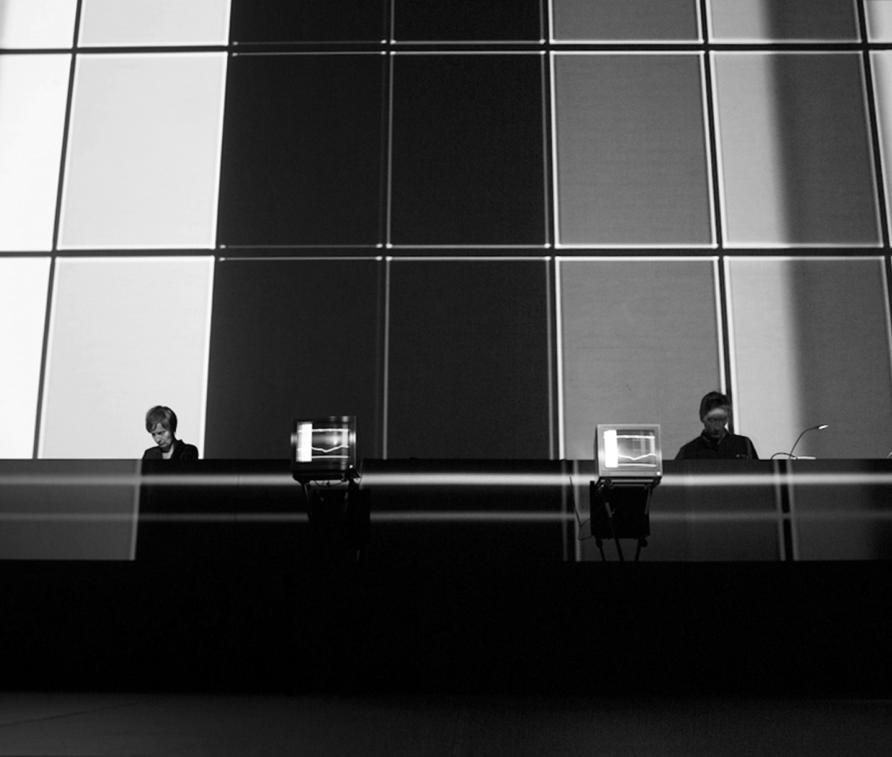
SYNCHROPATH is an audio/video project which explores the emotional potential of sound and
video communication systems extracted from the daily life. SYNCHROPATH develops a method of
composing based on the synchronism from video and audio files.The generated instruments come
from several different sound and video sources.
SCHNITT selects 42 audio sources and 28 video sources from which they extract 678 audio files
and 234 video files. The single files will be processed, assembled and synchronized between
themselves and built up the basic structure of the performance.
Live Amelie Duchow and Marco Monfardini complete the project by mixing in realtime the final
composition of the performance.The initial inspiration for the realization of the project
Synchropath can be found in the impact of the disorder and chaos generated by the invasive
and oppressive presence of sound and visual sources which surround our everyday lives.
SCHNITT questions the status of the image, an exploration between communication systems post
- television, public screens, websites, home movie’s, surveillance cameras, service monitors
etc.
SCHNITT activates a process of addition/subtraction which is taking position beyond from the
image itself .During the interaction between sound and light the captured images reveal only
in some parts their own figurative origin, the 8 tracks continue along between balance and
abstraction, harmony and obsession.
artist :
MARCO MONFARDINI
concept, music and video : MARCO MONFARDINI
format : audio/video performance
production : sync
website :
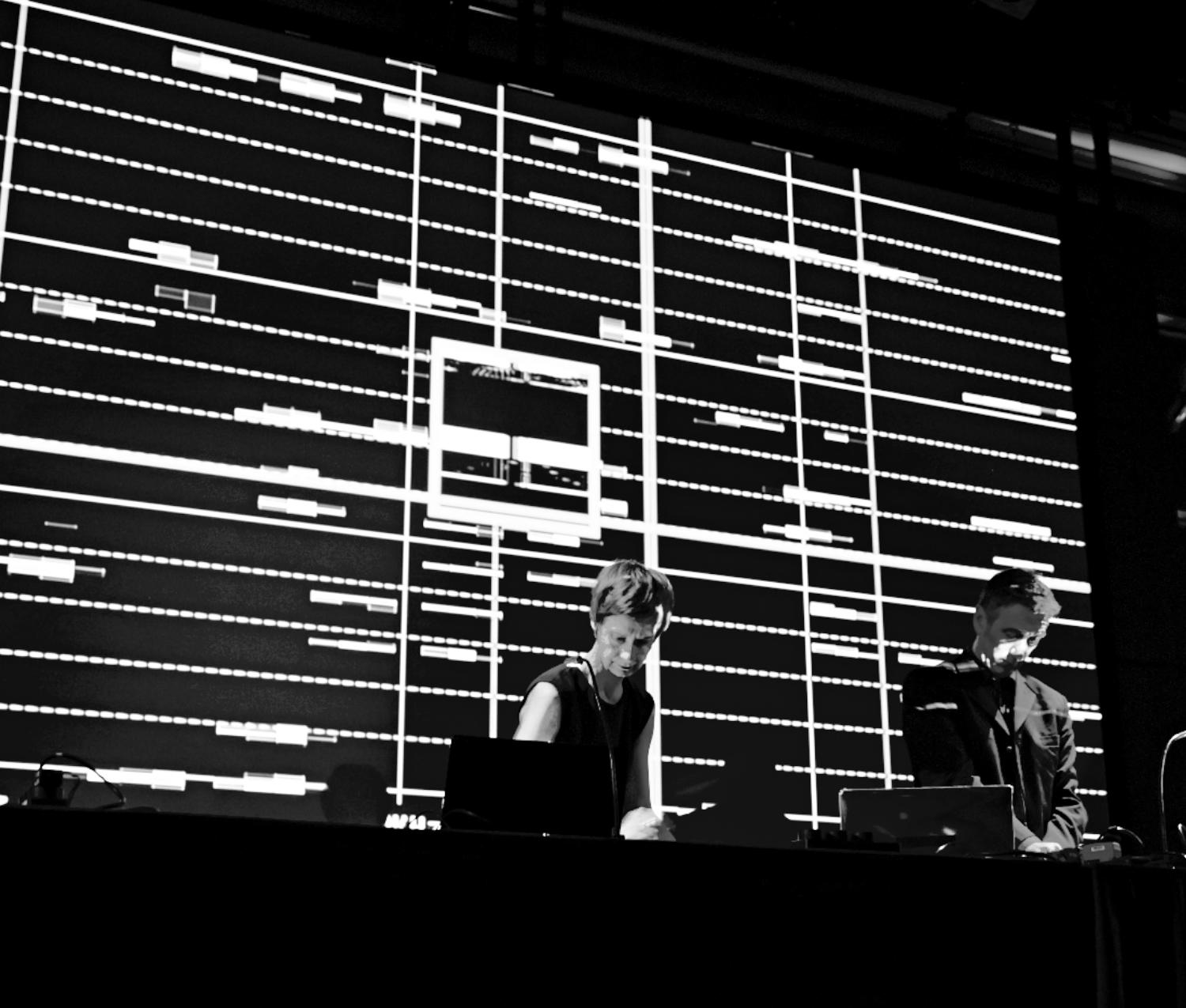
UN-LOG
MARCO MONFARDINI
booking :
info@extrasync.net
artist :
SCHNITT
concept, music and video : MARCO MONFARDINI / AMELIE DUCHOW
format : audio/video performance
production : sync
website :
MEMORY CODE
Schnitt
booking :
info@extrasync.net
artist :
AMELIE DUCHOW / GARY NEEDHAM
concept and music : AMELIE DUCHOW
format : audio performance
production : sync
website :
GIMP
Amelie Duchow
booking :
info@extrasync.net
artist :
AMELIE DUCHOW
concept and music : AMELIE DUCHOW
concept and video : MARCO MONFARDINI
format : audio/video performance
production : sync
website :
TONSTICH
Amelie Duchow
booking :
info@extrasync.net
artist :
SCHNITT
concept, music and video : MARCO MONFARDINI / AMELIE DUCHOW
format : audio/video performance
production : sync
website :
SYNCHROPATH
Schnitt
booking :
info@extrasync.net

sync
This site does not use cookies or other user data tracking technologies
©2026 sync

sync


[ PRODUCTIONS ]
LOGOS MATER
AMELIE DUCHOW : LOGOS MATER
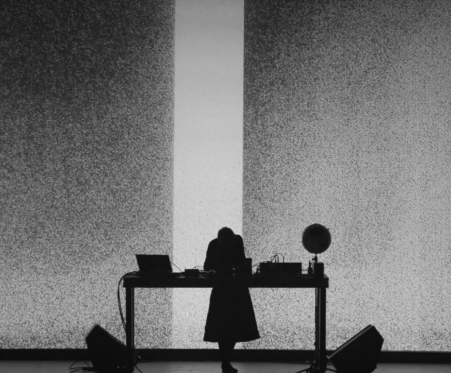
The
audiovisual
project
LOGOS
MATER
explores
language
beyond
meaning,
as
sound,
rhythm,
texture and resonance.
Amelie
Duchow
invites
participants
worldwide
to
contribute
recordings
in
their
native
languages,
which
become
the
raw
material
for
an
evolving
sonic
composition.
Through
sound
analysis
and
digital
transformation,
these
contributions
converge
in
a
live
performance
connecting
languages,
territories
and
identities.
Rather
than
communicating
through
words,
LOGOS
MATER
constructs
a
global
sonic
language
that
transcends
cultural
and
geographical
boundaries.
LOGOS
MATER
was
developed
in
close
connection
with
its
chromatic
dimension,
bringing
the
sonic
layers
into
dialogue
with
a
language
that
suspends
the
image
to
foreground
light,
evolving
into
a
form
of
visual
phonetics.
artist :
AMELIE DUCHOW
concept and music : AMELIE DUCHOW
concept and video : MARCO MONFARDINI
format : audio/video performance
production : sync / extrasync
website :
Logos Mater
Amelie Duchow
booking :
info@extrasync.net
SCHNITT + AOI YAMAGUCHI : CALLIGRATON
Calligraton
is
a
live
performance
that
emerges
from
the
collaboration
of
the
duo
Schnitt
and
Japanese
calligrapher
Aoi
Yamaguchi.
The
project
is
developed
on
two
apparently
distantforms
of
expression,
experimental
sound
composition and Japanese calligraphy "shodō".
Schnitt
and
Aoi
Yamaguchi
explore
in
Calligraton
the
relationship
between
sound
and
writing,
rhythms,
balances,
full
and
empty
spaces,
sounds
and
silences
confront
each
other
on
stage,
discovering
a
profound
affinity
between
sound
and
sign.
The
electronic/digital
compositional
gesture
relates
to
the
calligraphic
gesture
in
an
intimate
conversation
that
explores
the
interconnection
between
the
human
gesture
and
the technological element.
The
performance
develops
in
a
series
of
movements,
each
characterized
by
calligraphicwriting
performed
by
Aoi
Yamaguchi
on
Japanese
gasen
paper
and
a
related
sound
compositionperformed live by Schnitt.
artist :
SCHNITT + AOI YAMAGUCHI
concept : SCHNITT + AOI YAMAGUCHI
music and video : SCHNITT
calligraphy : AOI YAMAGUCHI
format : audio/video performance
production : Asia/Europe Cultural Festival
(AEC Fest) / sync / extrasync
website :
Calligraton
Schnitt
Aoi Yamaguchi
booking :
info@extrasync.net
CALLIGRATON

SCANSCAPE
SCANSCAPE
developed
by
the
duo
SCHNITT
(
Marco
Monfardini
and
Amelie
Duchow)
and
the
media
artist
Gianluca
Sibaldi
is
a
site-specific
audio
/video
installation
based
on
an
analysis
of urban city life.
The
technology
developed
by
the
artists
for
SCANSCAPE
permits
to
access
in
realtime
on
numerous
public
world
webcams
which
undergo
a
continuous
scanning
process
towards
the
device
EXTRAscan,
a
sort
of
scanner
able
to
read
the
characteristics
of
the
scanned
cities
converting
them
in
sound
and
video
images.
An
urban
symphony
and
contemporary
reinterpretation
that
follows
the
city
life,
reflecting
its
characteristics
in
form
of
visual
and
sound
perception.
Since
the
early
90s,
public
webcams
are
present
in
our
urban
city
life,
citizens
coexist
with
this
technological
system
that
renders
their
life,
their daily gestures, their movements public.
SCANSCAPE
emphasizes
the
relationship
using
technology
as
a
creative
tool
by
designing
a
hypothetical
global
city
where
questions,
doubts
and
fears
about
the
technological
invasion
harmonize
with
the
sharing
of
culture,
traditions
and
attitudes
conveyed
by
technology
itself.
A
global
city
that
submits
its
diversity
to
a
process
of
continuous
analysis
expressing
its
existence
towards
sound
as
a
universal
language.
The
installation
SCANSCAPE
aims
to
confront
ourselves
with
the
life
of
the
present,
offering
a
global
view
that
through
the
analysis
of
different
world
cities
hypothesises
a
conscious
coexistence
between
humanity and technology.
artist :
SCHNITT + GIANLUCA SIBALDI
concept and music : SCHNITT + GIANLUCA SIBALDI
format : audio/video lnstallation
production :
ACC Asia Culture Center
sync /
extrasync
website :
SCANSCAPE
booking :
info@extrasync.net
SCANSCAPE
SCANAUDIENCE
SCANAUDIENCE
is
a
site-specific
live
audio/video
performance
based
on
the
realtime
scanning of the audience.
The
project
developed
by
Gianluca
Sibaldi
and
the
duo
SCHNITT
(Marco
Monfardini
and
Amelie
Duchow)
uses
a
specially
by
the
artists
developed
electronic
device:
a
scanner
able
to
"read"
any
object,
architecture
or
living
being
in
its
formal
elements,
translating
the
object's
outer
and
inner
dimension
in
sound
and video images.
A
bar
of
light
is
the
primary
tool
in
this
operation
of
realtime
scanning,
overpassing
in
several
sequences
the
audience,
analyzing
the
characteristics
related
to
people’s
body
shape,
height,
clothing
color
and
material.
The
software
developed
by
the
artists
is
based
on
computer
vision
algorithms
and
a
special
kind
of
neural
network
to
generate
both
visual
and audible results.
The
scanning
process
develops
with
a
sequence
of
slow
vertical
and
horizontal
scannings,
memorizing
the
basic
data
informations,
continuing
with
detail
and
intense
scanning
sequences,
the
beamed
light
passes
through
the
audience.
Contemporarily
a
network
of
softwares
processes
the
recaptured
light
elaborating
the
scanned
data
in
realtime
generating
a
new
visual
and
audible
restitution.Each
person
processed
by
the
scanner
generates
its
own
individual
sound
and
video
images
accordingly
the
audience
itself
is
becoming
the
protagonist
of
the
show,
determinating
directly
the
audiovisual
output,
experiencing
at
the
same
time
a
new
sonorous
and
visual
dimension
under
the
artists
direction.
The
trio
uses
the
scanner
as
a
tool
for
exploring
and
reading
reality.
It
extracts
features
that
are
usually
undetectable
through
a
cross-contamination
between
visual
elements
that
generate
sound
and
sound
elements
that
have visual correspondences.
artist :
SCHNITT + GIANLUCA SIBALDI
concept and music : SCHNITT + GIANLUCA SIBALDI
format : audio/video performance
production : sync /
extrasync
website :
SCANAUDIENCE
booking :
info@extrasync.net
SCANAUDIENCE
WHITE BALANCE
In
White
Balance,
SCHNITT
explore
white
as
a
perceptual
threshold
between
the
visible
and
the
audible,
presence
and
absence.
Drawing
on
the
photographic
process
of
white
balance,
which
calibrates
colour
temperature
to
render
reality
“correctly”,
the
duo
reinterpret
this
technical
procedure
as
a
metaphor
for
audiovisual translation.
Inspired
by
Robert
Ryman’s
radical
minimalism,
white
is
conceived
not
as
absence,
but
as
potential:
a
field
containing
all
frequencies
of
light
and,
by
extension,
all
sonic
possibilities.
The
performance
reverses
the
conventional
relationship
between
image
and
sound,
allowing
light
to
generate
sound.
Four
video
projectors
emit
modulated
white
pulses
towards
photosensitive
sensors,
which
convert
variations
in
brightness
into
electronic
signals
processed
in
real
time.
This
system
creates
a
feedback
loop
between
light,
sound,
performers
and
devices,
continuously
reshaping
the audiovisual composition.
Through
this
process,
White
Balance
questions
the
notions
of
neutrality
and
perceptual
truth,
revealing
the
hidden
sonic
potential
of
digital
images
and
translating
the
invisible
into
the
audible.
The
performance
unfolds
as
a
continuous
rebalancing
of
perception,
approaching
the
limits
of
what
can
be
seen
and
heard.
WHITE BALANCE
artist :
SCHNITT
concept, music and video : MARCO MONFARDINI
AMELIE DUCHOW
format : a/v performance
production : sync / extrasync
website :
WHITE BALANCE
SCHNITT
booking :
info@extrasync.net
DETECT
Detect
is
a
project
that
explores
the
phenomenon
of
inaudible
sound
—
sound
that
exists
beyond
the
threshold
of
human
perception,
generated
by
the
electromagnetic
emissions
of
the
technological
environment
that
surrounds
us.It
focuses
on
the
hidden
acoustic
dimension
of
our
contemporary
landscape:
a
continuous,
imperceptible
flux
of
electromagnetic
energy
produced
by
devices,
networks,
and
communication
systems
—
WiFi,
Bluetooth,
GSM,
data
streams
—
an
invisible
soundscape
that
defines
our
presence
in
the
digital age.
At
its
core,
Detect
examines
the
transformation
of
perception
in
a
world
saturated
with
immaterial
signals.The
project
investigates
how
technology,
while
expanding
the
spectrum
of
human
communication,
simultaneously
conceals
vast
portions
of
reality
within
inaudible
and
invisible layers of frequency.
These
electromagnetic
fields
—
silent
yet
omnipresent
—
are
the
pulse
of
our
digital
existence:
an
abstract
sonorous
network
that
connects
and
controls
us.By
making
these
frequencies
audible,
Detect
exposes
the
hidden
texture
of
the
environment,
transforming
the
invisible into an aesthetic experience.
Monfardini
approaches
these
signals
as
both
archaeological
traces
and
living
organisms
:
evidence
of
a
continuous
human–machine
dialogue,
yet
also
independent
entities
that
vibrate
and
interact
beyond
our
awareness.In
this
sense,
Detect
becomes
not
only
an
act
of
listening,
but
an
act
of
revelation
—
a
decoding
of
the
electromagnetic
unconscious
of
the contemporary world.
artist :
MARCO MONFARDINI
concept, music and video : MARCO MONFARDINI
format : a/v performance
production : sync
website :
DETECT
MARCO MONFARDINI
booking :
info@extrasync.net
DETECT
UN-LOG
The
term
log
file
refers
to
a
file
in
which
every
operation
performed
by
a
system
or
a
user
is
sequentially
and
chronologically
recorded.
Each
event,
each
error,
each
movement
leaves
a
trace.The
management
of
logs
allows
us
to
monitor,
analyze,
and
prevent
anomalies
or
threats
—
a
practice
of
surveillance
that,
behind
its
apparent
technical
neutrality,
has
evolved into a global device of memory.
A
log
file
preserves
the
entire
history
of
actions:
an
invisible
chronicle
that
mirrors
a
controlled
time,
an
automated
memory
that
writes
without
interruption.It
becomes
a
logbook
of
the
present
,
recording
every
gesture before we are even aware of it.
In
UN-LOG
(
literally
“to
disconnect”
),
Marco
Monfardini
transforms
the
log
file
into
a
metaphor
for
our
relationship
with
time
and
memory.
The
log
becomes
a
living
organism
—
a
visual
and
sonic
archive
in
constant
writing
—
a
digital
memory
that
does
not
forget,
that
overwrites
and
replaces
human
memory.
It
is
an
unconscious
map
of
behavior,
a
code
that
registers
our
passage
within
the
continuous
flow
of
information.To
un-log
means
to
suspend
the
automatic
writing
of
the
digital
self,
to
interrupt
the
continuity
of
recording
in
order
to
recover
a
direct,
sensory,
and
imperfect
perception.
The
visual
structure
of
UN-LOG
unfolds
as
a
stratified
field:
a
flow
of
data
transforming
into
image,
a
dynamic
landscape
where
glitches,
fragments,
and
errors
emerge
as
the
residues of a corrupted memory.
UN-LOG
artist :
MARCO MONFARDINI
concept, music and video : MARCO MONFARDINI
format : a/v performance
production : sync
website :
UN-LOG
MARCO MONFARDINI
booking :
info@extrasync.net
MEMORY CODE
The
performance
develops
an
audiovisual
system
in
which
sound,
moving
images
and
numerical
computation
interact
to
evoke
the
mechanisms
of
remembering.
Abstract
signals
generated
through
digital
processing
function
as
fragments
of
a
visual
language,
suggesting
images
that
remain
unseen yet continue to shape our perception.
Conceived
as
a
kind
of
visual
scanner
of
memory,
MEMORY
CODE
examines
the
unstable
relationship
between
perception,
recollection
and
representation.
Rather
than
reproducing
recognisable
images,
SCHNITT
translates
the
idea
of
visual
memory
into
an
evolving
audiovisual
structure,
where
image
and
sound
become
instruments
for
exploring
what
remains
beyond the visible.
The
project
also
opens
up
the
possibility
of
incorporating
the
individual
visual
memories
of
spectators,
extending
the
performance
into
a
field
of
subjective
associations
and
personal
recollections.
Each
memory
becomes
a
potential
source
of
material,
questioning
how
private
images
might
be
translated
into
a
shared
audiovisual experience.
MEMORY CODE
artist :
SCHNITT
concept, music and video : MARCO MONFARDINI
AMELIE DUCHOW
format : a/v performance
production : sync
website :
MEMORY CODE
SCHNITT
booking :
info@extrasync.net
GIMP
GIMP
is
an
electronic
sound
composition
by
Amelie
Duchow,
developed
in
response
to
Gary
Needham’s
essay
“Bringing
out
the
Gimp”,
published
in
Fashion
Theory.
Created
in
collaboration
with
Needham
and
artist
Yvonne
Trew
for
the
Fashion
Continuum
event
at
Nottingham
Contemporary,
UK,
on
22
April
2016,
the
work
explores
the
figure
of
the
gimp
across
popular culture, fashion, art and BDSM.
Associated
with
concealment,
masking
and
the
refusal
of
identification,
the
gimp
challenges
conventional
notions
of
identity,
visibility
and
humanity.
Duchow’s
electronic
soundscape
acts
as
a
sonic
counterpoint
to
this
figure,
translating
its
associations
with
risk,
transgression,
fear
and
ambiguity
into
an
abstract auditory experience.
Originally
released
as
a
limited
edition
of
100
CDs,
the
publication
contains
a
twelve-minute
composition
featuring
the
voice
of
Gary
Needham,
who
performs
spoken
extracts
and
key
words
from
his
essay.
GIMP
explores
how
sound
can
evoke,
transform
and
challenge
an
image
that remains unseen.
artist :
AMELIE DUCHOW
GARY NEEDHAM
concept and music : AMELIE DUCHOW
format : audio performance
production : sync
website :
GIMP
Amelie Duchow
booking :
info@extrasync.net
GIMP
TONSTICH
TONSTICH
is
an
audio/video
project
based
on
the
creation of a sonorous dress.
In
TONSTICH
basic
sound
parameters
-
Attack
Decay
Sustain
Release
are
directly
related
to
the
dress
construction
parameters
X
and
Y
(length | width).
The
characteristics
of
the
shape,
fit
and
look
of
this
imaginary
dress
are
determined
by
the
audio
composition,
following
the
strict
manufacturing
schedule
of
each
production
unit,
the
dress
is
initially
modelled
by
the
industrial
production
process
yet
continuously
modified
by
the
listener’s
individual
sonorous
experience.
The
audio
material
used
for
the
composition
of
TONSTICH
is
the
authentic
sound
recorded
in
industrial
manufacturing
facilities
of
garments
and textiles.
Single
noise
patterns
from
the
bartack
machine
mixed
with
the
humming
of
the
2
needle
machine
weave
in
combination
with
electronic
structures
a fit sound fabric.
The
audio/video
performance
TONSTICH
progresses
in
6
movements,
each
one
representing
a
development
stage
of
this
unique
creation
proposed by Amelie Duchow.
artist :
AMELIE DUCHOW
concept and music : AMELIE DUCHOW
concept and video : MARCO MONFARDINI
format : audio/video performance
production : sync
website :
TONSTICH
Amelie Duchow
booking :
info@extrasync.net
TONSTICH
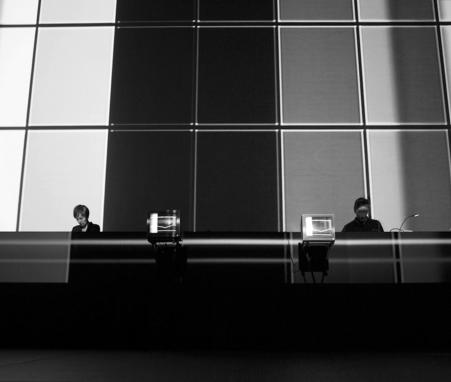
SYNCHROPATH
SYNCHROPATH
is
an
audio/video
project
which
explores
the
emotional
potential
of
sound
and
video
communication
systems
extracted
from
the
daily
life.
SYNCHROPATH
develops
a
method
of
composing
based
on
the
synchronism
from
video
and
audio
files.The
generated
instruments
come
from
several
different
sound
and
video
sources.
SCHNITT
selects
42
audio
sources
and
28
video
sources
from
which
they
extract
678
audio
files
and
234
video
files.
The
single
files
will
be
processed,
assembled
and
synchronized
between
themselves
and
built
up
the
basic
structure of the performance.
Live
Amelie
Duchow
and
Marco
Monfardini
complete
the
project
by
mixing
in
realtime
the
final
composition
of
the
performance.
The
initial
inspiration
for
the
realization
of
the
project
Synchropath
can
be
found
in
the
impact
of
the
disorder
and
chaos
generated
by
the
invasive
and
oppressive
presence
of
sound
and
visual
sources
which
surround
our
everyday
lives.
SCHNITT
questions
the
status
of
the
image,
an
exploration
between
communication
systems
post
-
television,
public
screens,
websites,
home
movie’s,
surveillance
cameras,
service
monitors etc.
SCHNITT
activates
a
process
of
addition/subtraction
which
is
taking
position
beyond
from
the
image
itself
.During
the
interaction
between
sound
and
light
the
captured
images
reveal
only
in
some
parts
their
own
figurative
origin,
the
8
tracks
continue
along
between
balance
and
abstraction, harmony and obsession.
artist :
SCHNITT
concept, music and video : MARCO MONFARDINI
AMELIE DUCHOW
format : a/v performance
production : sync
website :
SYNCHROPATH
Schnitt
booking :
info@extrasync.net
SYNCHROPATH


sync
This site does not use cookies or other user data tracking technologies
©2026 sync
